Table of Contents
Are your kids begging for a drone? Toy drones are quickly becoming one of the most popular gifts, offering endless hours of fun and a fantastic introduction to technology. But with so many options out there, choosing the right one can feel overwhelming.
This guide will help parents navigate the world of toy drones for kids, ensuring you pick a safe, durable, and age-appropriate model that will delight your child and perhaps even spark a passion for aviation!
Why Toy Drones are Great for Kids
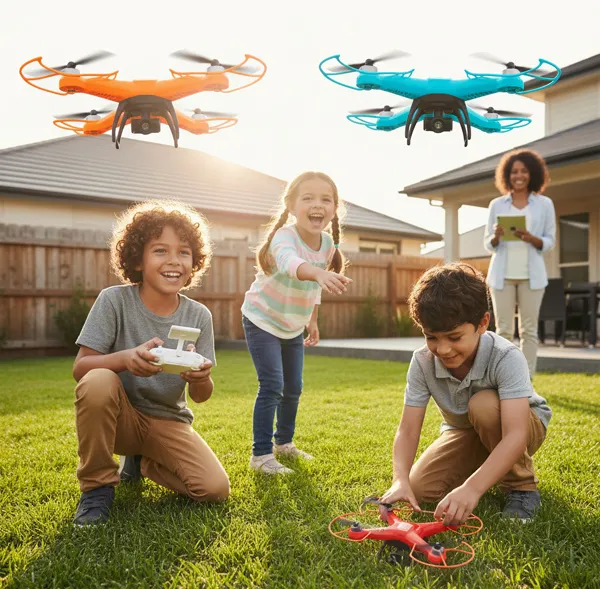
Beyond just being cool, toy drones offer a surprising array of benefits for children:
- Develops Hand-Eye Coordination: Piloting a drone requires precision and focus, honing essential motor skills.
- Introduces STEM Concepts: Kids learn about aerodynamics, basic physics, and remote control technology in a hands-on way.
- Encourages Problem-Solving: Learning to control a drone, troubleshoot minor issues, and even master tricks builds resilience and problem-solving skills.
- Promotes Outdoor Play: Many drones are best flown outdoors, encouraging kids to get fresh air and active.
- Boosts Confidence: Mastering a new skill like flying a drone can be incredibly rewarding for a child.
Key Features to Look for (Parent’s Checklist)
When shopping for a toy drone for your child, keep these important features in mind:
- Durability is King: Kids will crash them. Look for models made from flexible, impact-resistant plastics with built-in propeller guards.
- Ease of Control:
- One-Key Takeoff/Landing: Simplifies the most challenging parts of flying.
- Altitude Hold: Automatically maintains height, making it easier for beginners to focus on direction.
- Headless Mode: This feature simplifies controls by making the drone’s “front” always relative to the pilot, regardless of its actual orientation. Great for young beginners!
- Safety First:
- Propeller Guards: Absolutely essential to protect little fingers and prevent damage to furniture.
- Emergency Stop: A quick way to power down the drone if things go awry.
- Battery Safety: Choose drones with protected, easily rechargeable batteries.
- Flight Time & Batteries: Most toy drones offer 5-10 minutes of flight. Purchase extra batteries to extend playtime!
- Camera (Optional): Many kids love seeing the world from above. Basic cameras are fun, but don’t expect HD quality.
- Size & Weight: Smaller, lighter drones are better for indoor play, while slightly larger ones handle outdoor breezes better.
Top Recommendations by Age Group
- Ages 6-8 (Beginner Flyers): Focus on simplicity and extreme durability.
- Look for: Mini drones, often palm-sized, with full propeller protection, one-key functions, and altitude hold.
- Example: Holy Stone HS210, Ryze Tello (slightly more advanced but very stable).
- Ages 9-12 (Intermediate Fun): Kids in this range can handle slightly more features.
- Look for: Drones with basic cameras, multiple speed modes, and simple stunt capabilities (flips). Good outdoor stability is a plus.
- Example: Potensic A20 Mini Drone, Syma X20/X22.
- Ages 13+ (Advanced Toy Drones): Teenagers might appreciate more sophisticated controls and better cameras.
- Look for: Drones with FPV (First Person View) capabilities (viewing through a phone app), more advanced stunt modes, and potentially GPS for better outdoor stability.
- Example: DJI Mini series (while not strictly “toy,” the Mini SE is beginner-friendly and lightweight), Eachine E016F.
Remember to always supervise younger children when they’re flying drones, especially outdoors. Start in open spaces without obstacles to minimize crashes and maximize fun. With the right toy drone, your child can embark on exciting aerial adventures and learn valuable skills along the way!
👉 Related guide → Best Toy Drones for Kids by Age