
Table of Contents
Are you looking for a fun and effective way to level up your fitness routine, improve your posture, and sharpen your athletic performance? Look no further than the humble but incredibly effective balance board. Far from being just a toy or a piece of physical therapy equipment, balance boards have evolved into a versatile tool for everyone from elite athletes to office workers looking to stay active. In this ultimate guide, we’ll dive deep into everything you need to know about balance boards, how they work, and why you should consider adding one to your wellness arsenal.
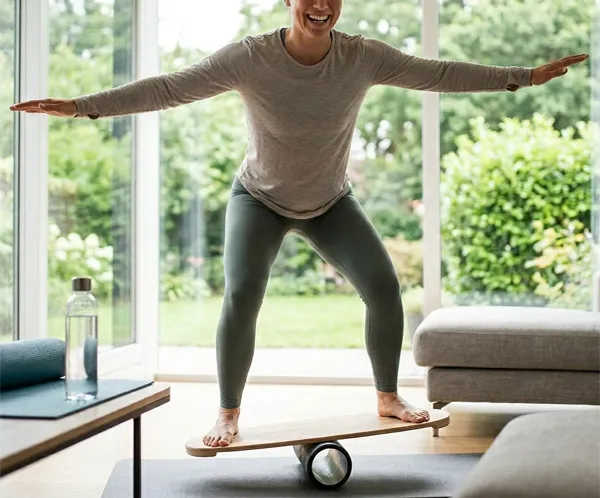
What is a Balance Board?
A balance board, in its simplest form, is a flat board (often made of wood or plastic) that you stand on, which is designed to be unstable. The instability comes from a fulcrum point underneath the board, which can be a ball, a roller, or a rounded base. To stay upright and balanced, your body must engage a multitude of muscles, particularly your core, and make micro-adjustments in real-time. This dynamic process, known as proprioception, is the secret sauce behind the many benefits of balance training.
Key Benefits of Balance Boards
[Optional: Place a small, inline graphic here showing different board types: Wobble Board vs. Roller Board]
1. Incredible Core Strength and Stability
The primary benefit is often a stronger core. Maintaining balance on a board forces your abs, obliques, and lower back muscles to work in unison, providing a comprehensive core workout that’s more effective and engaging than standard planks. A stable core is fundamental for good posture and preventing injury in everyday activities.
2. Enhanced Proprioception and Coordination
Proprioception is your body’s innate ability to sense its position and movement in space. Training this system improves your overall coordination, reaction time, and body awareness, which is invaluable for sports, dance, and even navigating a busy sidewalk.
3. Better Balance and Injury Prevention
By challenging and strengthening the stabilizing muscles around your ankles, knees, and hips, balance board training significantly improves your static and dynamic balance. This translates to better athletic performance and, crucially, a reduced risk of falls and common injuries like sprained ankles.
4. Posture Correction
Engaging your deep core stabilizers naturally leads to better spinal alignment. With consistent practice, you’ll find yourself standing taller and more confidently, correcting the effects of prolonged sitting at a desk.
Types of Balance Boards
There’s a wide variety of boards, each offering a unique challenge:
- Wobble Boards: Typically a round board with a fixed semi-spherical base. They offer a single point of instability, making them a great entry point for beginners or for use as a standing desk accessory.
- Roller Boards: Feature a cylindrical roller that moves freely underneath the board, creating a significant challenge for lateral (side-to-side) balance. They are favored by surfers, skateboarders, and experienced balance-seekers.
- Rocker Boards: These are the most stable, with a curved base that only moves in one direction (usually front-to-back or side-to-side). They are ideal for physical therapy and gentle introductory training.
- Air-Filled Balance Cushions: Not a board, but a portable alternative that still provides a dynamic, unstable surface for balancing or sitting.
How to Get Started
If you’re new to balance boards, it’s essential to start slow and safe. Here are a few tips to begin your journey:
- Start on a Carpeted Surface: Carpeting or a yoga mat will slow the board’s movement and provide cushioning, making it easier to control.
- Use a Support: For your first few attempts, stand near a wall, countertop, or sturdy chair for stability. As your confidence grows, rely on the support less and less.
- Find Your Center: Aim to keep your weight centered on the board. Look straight ahead, rather than down at your feet, to help maintain your balance.
- Practice for Short Bursts: Consistency is key. Even 5-10 minutes a day of practice can lead to noticeable improvements in your balance and core strength.
Conclusion
Incorporating a balance board into your lifestyle is a simple yet powerful way to build functional strength, enhance your body awareness, and add a spark of fun to your fitness regimen. Whether you’re looking to boost your sports performance, improve your posture, or just stay active at home, there’s a perfect balance board waiting to help you find your center. Ready to take the plunge? Start your journey towards a stronger, more stable, and more confident you!