
Table of Contents
1. The “Stud” Test: Spotting Fakes
The most common risk with used deals is “Le-not-GO” (knock-off brands like Lepin or generic bricks).
- The Logo: Genuine LEGO bricks almost always have the LEGO logo embossed on every stud. If the studs are hollow or blank, it’s a clone brand.
- The Feel: Real LEGO has a specific “clutch power.” If the bricks feel greasy, brittle, or are incredibly difficult to pull apart (or too loose to stay together), they are likely fakes.
- The Shine: Authentic bricks have a consistent, high-quality sheen. Knock-offs often look duller or have “marbling” in the plastic color.
2. Condition & “Play Wear”
A set can be 100% complete but still in poor condition. Check for these “deal-breakers”:
- Bite Marks: Look closely at the corners of bricks and the heads of minifigures. Kids (and pets) are notorious for using their teeth as brick separators.
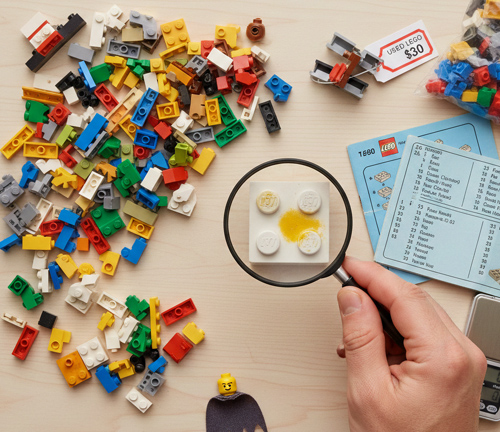
- Sun Damage (Yellowing): White, light gray, and blue bricks are prone to yellowing if kept near a window. While “retrobrighting” (using hydrogen peroxide) can fix this, it’s a chore you should factor into the price.
- Stress Marks: Check for tiny white lines on clips, hinges, and the sides of torsos. These indicate the plastic is about to snap.
3. The Minifigure Audit
In many used sets, the minifigures account for 50% to 80% of the total value.
- The Swap-Out: Watch out for “Frankenstein” figures—where a seller has put a common head on a rare torso to make the set look complete.
- The “Cracked Torso” Check: Look at the sides of the torso under the arms. This is the most common place for cracks, which significantly drops the value.
- Accessories: Ensure capes aren’t frayed and unique weapons/tools are present. These are often the first things lost.
4. Measuring “Completeness”
Unless you are buying a sealed box, “100% Complete” is often an optimistic guess by the seller.
- The Weight Method: If buying a bulk lot that claims to be a specific set, check the original weight on BrickLink. If the set is supposed to be 2kg and the bag weighs 1.5kg, you’re missing a lot more than a few spare studs.
- Specialized Parts: Scan for the “hero” pieces—large molded parts, printed windshields, or unique colors that can’t be easily replaced from your spare parts bin.
5. Smells and Stickers
- The “Sniff Test”: This sounds strange, but smell the bricks. LEGO is highly porous and will hold the scent of cigarette smoke or heavy perfume for years. Getting these smells out is notoriously difficult.
- Sticker Quality: Are the stickers peeling, off-center, or bubbling? Replacing a discontinued sticker sheet can sometimes cost as much as the set itself.
Red Flags to Watch For
| Feature | Good Deal | Red Flag |
| Photos | Clear, high-res, shows the actual set built. | Stock photos or blurry “pile of plastic” shots. |
| Price | 30-50% off current retail for used. | “Too good to be true” (e.g., a $500 UCS set for $50). |
| Seller | Willing to answer questions or send more photos. | Pressuring for a quick sale or “cash only” with no inspection. |
Pro Tip: The “Inventory Flip”
If you’re inspecting a set in person, ask the seller if they have the instruction manual. Flip to the back page where the part inventory is listed. Pick 3-4 rare-looking pieces from that list and ask the seller to point them out in the build. If they can’t find them, the set likely isn’t complete.