Table of Contents
Toy drones have soared in popularity, becoming a common sight on many children’s wish lists. These miniature flying machines offer exciting entertainment and can even introduce kids to basic principles of aerodynamics and technology. However, as with any toy, safety is a primary concern for parents. So, are toy drones safe for children? Let’s break it down.
The Appeal of Toy Drones
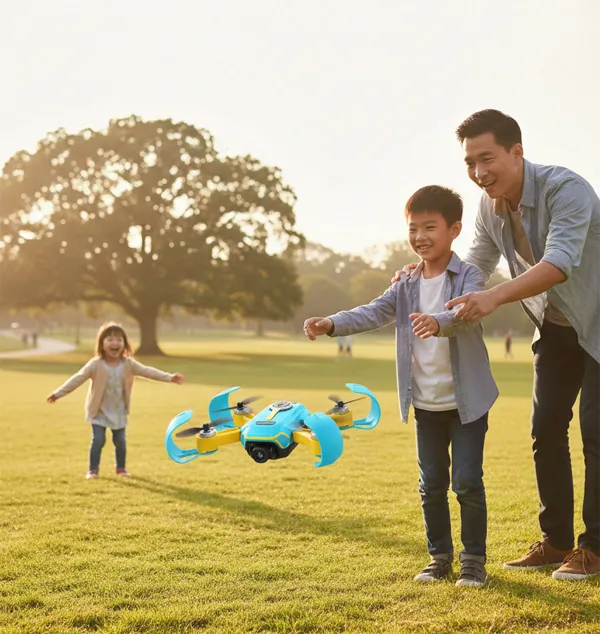
For kids, the thrill of controlling something that flies is immense. Toy drones come in various sizes and complexities, from simple, palm-sized models perfect for indoor play to more robust versions with cameras. They can enhance hand-eye coordination, problem-solving skills, and even encourage outdoor activity.
Potential Risks and How to Mitigate Them
While generally designed with safety in mind, there are a few considerations when letting children operate toy drones:
1. Propeller Blades: The most immediate concern is the spinning propellers. Even on small drones, these can cause minor nicks or scratches. * Mitigation: * Choose models with propeller guards: Many toy drones come with these plastic shields that enclose the blades, significantly reducing the risk of injury. * Supervise young children: Always be present when younger kids are flying their drones, especially when they are still learning. * Teach proper handling: Instruct children to never touch the propellers while they are spinning and to keep fingers away from the drone during takeoff and landing.
2. Battery Safety: Like all electronic devices, drones use batteries that need to be handled correctly. * Mitigation: * Use original chargers: Always use the charger provided with the drone or a manufacturer-approved replacement. * Avoid overcharging: Don’t leave batteries charging unattended for extended periods. * Inspect batteries: If a battery appears swollen or damaged, discontinue use immediately and dispose of it properly. * Store batteries safely: Keep batteries in a cool, dry place away from direct sunlight and flammable materials.
3. Flying Environment: Where a child flies their drone is crucial for safety. * Mitigation: * Choose open spaces: Encourage flying in open areas free from obstacles like trees, power lines, and busy streets. Parks or large backyards are ideal. * Stay away from people and animals: Drones, especially when learning, can be unpredictable. Teach children to maintain a safe distance from others to avoid accidental collisions. * Respect privacy: Remind children not to fly drones over private property or in a way that infringes on others’ privacy, especially if the drone has a camera.
4. Age Appropriateness and Supervision: * Check age recommendations: Manufacturers provide age guidelines for a reason. These are based on the complexity of the drone and the dexterity/understanding required to operate it safely. * Start simple: For younger children, begin with very basic, easy-to-control models. * Consistent supervision: Even for older children, occasional supervision can help reinforce good habits and ensure responsible drone use.
The Verdict: Safe with Precautions
Toy drones can indeed be a safe and enriching toy for children when appropriate precautions are taken. By selecting the right drone, teaching responsible flying habits, and providing adequate supervision, parents can ensure their children enjoy the thrill of flight without unnecessary risks.
Ultimately, open communication with your child about safety rules and responsible drone operation is key. Happy flying!
👉 Learn more:
Best Indoor Toy Drones for Small Spaces →