
Table of Contents
Dollhouses. The very word evokes a sense of wonder, inviting us into miniature realms where stories unfold with every rearranged piece of furniture or new resident. Far from being a relic of the past, dollhouses in 2026 are vibrant, diverse, and as captivating as ever, evolving to meet the imaginations of a new generation.
More Than Just a Toy: The Benefits of Dollhouse Play
Before we delve into the latest trends, let’s appreciate why dollhouses remain a cornerstone of childhood development:
- Imagination and Creativity: Dollhouses are ultimate story starters. Children craft narratives, develop characters, and bring their unique worlds to life, fostering boundless creativity.
- Social and Emotional Learning: Through role-playing, children explore social dynamics, practice empathy, and process emotions. They can experiment with different family structures and daily routines in a safe, controlled environment.
- Fine Motor Skills and Spatial Reasoning: Arranging tiny furniture, positioning dolls, and setting up scenes all require delicate hand-eye coordination and an understanding of spatial relationships.
- Language Development: As children narrate their play, they expand their vocabulary and practice storytelling, often holding conversations for their miniature inhabitants.
What’s New in Dollhouses for 2026?
The dollhouse market is flourishing with innovations and timeless classics. Here’s what’s capturing hearts this year:
1. The Rise of Sustainable & Eco-Friendly Designs
In 2026, parents are increasingly seeking toys that are kind to the planet. Wooden dollhouses, always a classic, are seeing a resurgence with sustainably sourced timber, non-toxic paints, and minimalist designs that encourage open-ended play. Brands are also offering dollhouse furniture made from recycled plastics and natural fabrics.
2. Smart Technology Integration (Subtle, Not Overwhelming)
While traditional play remains key, some dollhouses now feature subtle tech enhancements. Imagine tiny LED lighting systems that turn on with a tap, or miniature sound modules that play ambient “household” noises like a gentle doorbell or a crackling fireplace. These additions enhance realism without detracting from imaginative play.
3. Modular and Customizable Designs
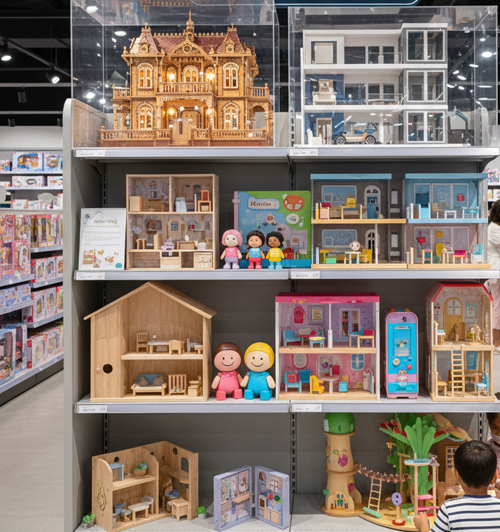
Today’s dollhouses are all about personalization. Many models feature modular rooms that can be rearranged, expanded, or stacked in different configurations, allowing children to design their dream home over and over again. This adaptability ensures the toy grows with the child’s imagination.
4. Diverse Characters and Themes
Reflecting our diverse world, dollhouse figures and themes are more inclusive than ever. You’ll find a wider range of skin tones, abilities, and modern family structures. Beyond traditional homes, there are now dollhouses styled as treehouses, urban apartments, cafes, and even fantastical castles, catering to every interest.
Choosing the Perfect Dollhouse: A Buyer’s Guide
Consider these points when selecting a miniature abode:
- Size and Space: How much room do you have? Larger dollhouses offer more play area but require dedicated space. Smaller, portable options are great for travel.
- Material: Wooden dollhouses are durable and often heirloom quality. Plastic ones are typically lighter, more affordable, and sometimes feature interactive elements.
- Age Appropriateness: Simpler, sturdier designs are best for younger children, while older kids might appreciate more intricate details and customizable features.
- Accessories and Furniture: Does the dollhouse come furnished, or will you need to buy pieces separately? Many brands offer extensive accessory lines to complement their houses.
- Theme: Does your child dream of a grand Victorian manor, a modern minimalist home, or something whimsical and magical?
The Lasting Legacy
In an increasingly digital world, the dollhouse stands as a beautiful reminder of the power of tactile, imaginative play. It’s a space where children (and adults!) can create, connect, and explore miniature worlds filled with endless possibilities. In 2026, the dollhouse isn’t just surviving; it’s thriving, continuing to build new memories one tiny room at a time.